Obtaining Death Certificate
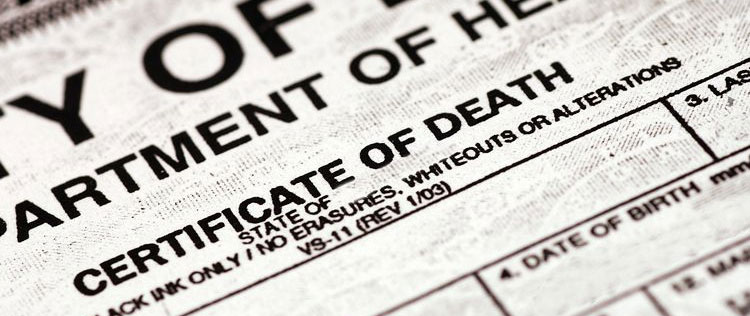
Registration of death is mandatory in issue and accordance with the law of ‘Registration of Births and Deaths Act 1969’.
Under this Act, the chief executive authority appointed by the Registrar in the states is responsible for statistical reports and registration work.
Registration in rural and urban areas:
- A Registrar office is established in every municipality, city council, municipal headquarters, etc. to register the death of an individual in urban areas.
- Gram Panchayat office, PHC and Community Health Centre are established to register the death of an individual in rural areas.
Person responsible for registration:
- In matters where death occurs in home, the head of the family or, the nearest closest relative (in absence of the head) will have to alert the local Registrar.
- In matters where death occurs in a hospital, police station, hotel and inn or, in the jail, the person/officer in-charge of the institution will be responsible for providing such information.
Death certificate can only be obtained after the Registrar has completed all the registration formalities and has undergone sufficient and detailed investigation about the scenario and occurrence of the death.
Registration Time and Fees:
Death registration should take place within 21 days from the death of the individual. Registration within a period of 21 days and obtaining the death certificate thereafter within this time frame is free of charge. However, registration beyond the period of 21 days requires an individual to pay late registration fees. There are no charges required to be paid by an individual for the amendments or cancellation of the registration form.
Benefits of a death certificate:
You will need a death certificate for the following:
- To inherit property
- To settle the claims and cases of insurance and pension schemes
- For property/land conversion to benefit from the various schemes of security